
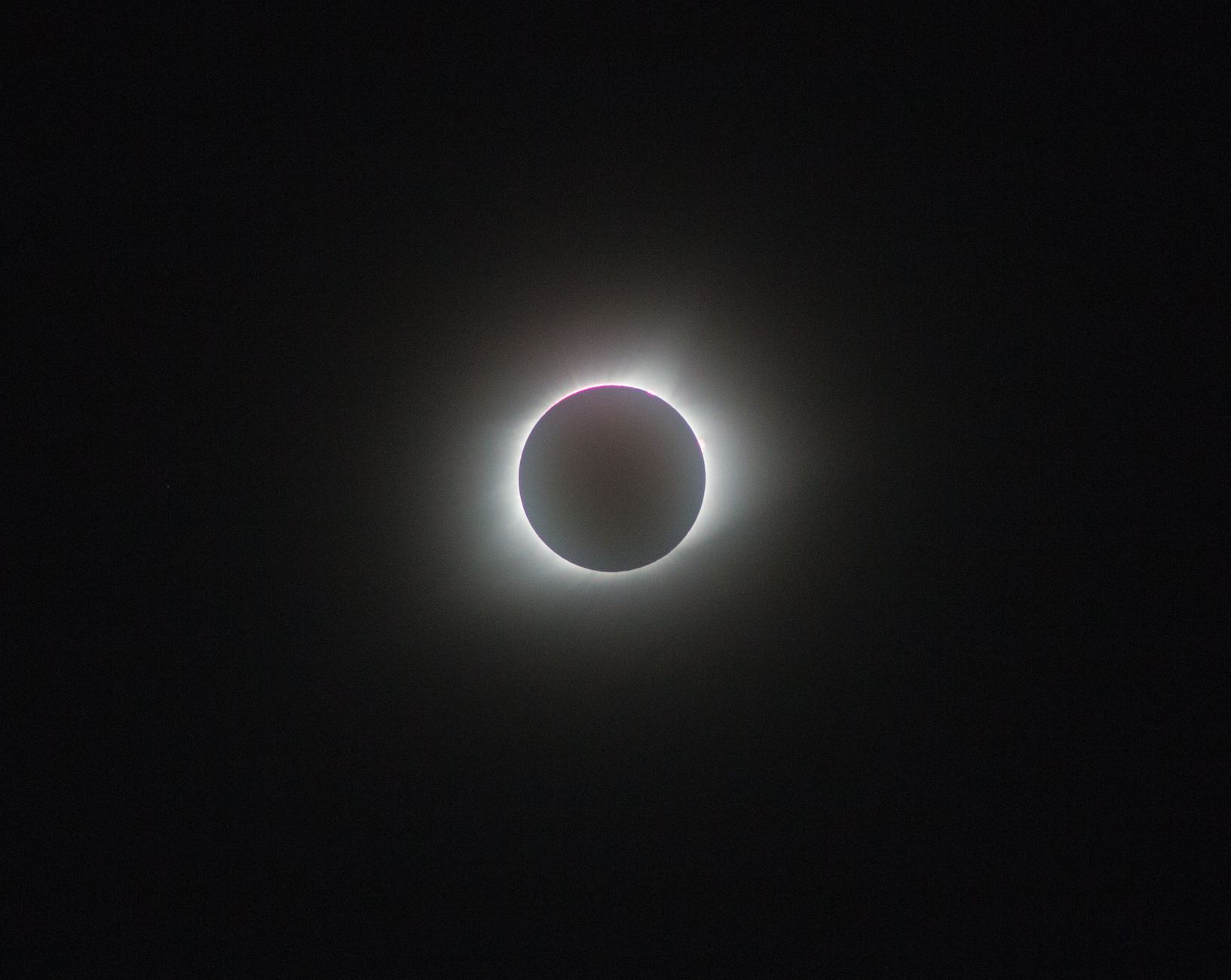

There are very few moments in life that make you feel the raw mechanics of the universe. Standing inside the shadow of the Moon during a total solar eclipse is one of them. For a few breathless minutes, day becomes night, the horizon glows in every direction, and the Sun’s corona burns silently around the edges of a perfectly placed Moon. It is not a spectacle you forget, and once you have seen it, you will do almost anything to see it again.
Why Spain Has Become the Next Eclipse Destination
The wide, open plains of north-central Spain offered something that eclipse chasers dream about: clear skies, minimal light pollution, and dramatic landscapes stretching to the horizon. Ancient churches and golden sunflower fields set the scene for one of nature’s most precise performances. Spain’s ongoing drought, while serious for its ecosystems and agriculture, ironically delivered near-perfect viewing conditions by keeping cloud cover almost entirely absent during the event. For context, meteorologists estimate that clear sky probability in the Castile and León region during August runs well above 80 percent, making it one of Europe’s most reliable summer viewing zones.
The path of totality carved across the Iberian Peninsula with mathematical precision, the result of the Moon sitting at just the right distance from Earth to appear almost exactly the same angular size as the Sun. This cosmic coincidence, unique among the planets in our Solar System, is what makes total eclipses possible at all. Scientists note that the Moon drifts roughly 3.8 centimeters farther from Earth each year, meaning that in the deep future, total solar eclipses will no longer be possible. Every eclipse you witness today is a privilege no future generation is guaranteed.
The 2024 Eclipse and the Growing Culture of Eclipse Chasing
The Moon’s shadow crossed the American heartland in 2017 and again in April 2024, drawing tens of millions of viewers and generating an estimated 1.1 billion dollars in economic activity across eclipse corridor states. That cultural momentum has now gone global. Eclipse tourism is a growing niche, with travelers booking flights, renting telescopes, and purchasing solar filter gear months in advance. Spain is already seeing interest build ahead of the August 12, 2026 total solar eclipse, which will trace a path across the Balearic Islands, mainland Spain, and into North Africa, offering one of the most accessible European eclipse paths in decades.
What This Means for Gear, Travel, and Smart Planning
Eclipse chasing has quietly become one of the strongest seasonal drivers for consumer tech purchases. Solar viewing glasses, astronomy binoculars, portable telescopes, mirrorless cameras with solar filters, and compact tripods all see significant search and sales spikes in the months before a major eclipse event. If you are planning to experience the 2026 Spain eclipse, now is the time to research your gear, compare eclipse filter quality ratings, and lock in travel accommodations before demand surges. The universe runs on a precise schedule, and the smartest observers prepare well ahead of the shadow’s arrival.