
Why the Culture War Framing Falls Short
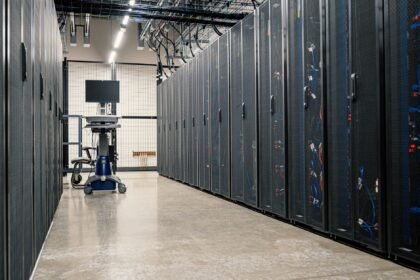
Walk through Ashburn, Virginia, and the scale of the problem becomes obvious. Concrete buildings line the major roads of what locals call Data Center Alley, the largest data center hub in the world. Industry leaders have increasingly described the local revolt against these facilities as a proxy for broader anxieties about affordability, corporate power, and a loss of control over daily life. That explanation is convenient, but it hides something more concrete. Many of the loudest objections trace back to a single, physical resource: electricity.
The typical facility in that part of Virginia now draws around 54 megawatts, roughly comparable to the power needs of a major airport. Most are wired into the existing grid, which means their demand lands directly on utilities such as Dominion Energy, whose generation mix still leans heavily on natural gas. When a county finds that a handful of neighbors are reshaping regional power planning, residents tend to ask who pays for the new transmission lines and what happens when the grid runs short. Those are questions about infrastructure and cost, not about technology in the abstract.
What Happens When Companies Bring Their Own Power
The newest wave of AI campuses is following a different path. The largest training sites can require hundreds of megawatts, and some planned projects are closer to the output of a major city. Connecting to a grid at that scale is often impractical, so developers are turning to behind-the-meter gas turbines and onsite diesel backup. Reports of multibillion-dollar turbine purchases by AI companies signal how seriously the industry takes this shift. Generating power at that magnitude is a heavy industrial act, and it brings air pollution, noise, and land use concerns that communities have historically debated through public utility processes. Now those decisions are being made by private firms, sometimes with fewer public hearings and less accountability. The result is a credibility gap that no branding campaign can close.
Where the Next Fight Is Likely to Happen
Pressure in established hubs will push developers toward places with sparse populations and easy access to gas pipelines, such as parts of Texas’s Permian Basin. Others will look overseas, where regulatory friction may be lower. Several states are already drafting rules that would force data centers to shoulder transmission costs or curtail use during peak demand, and those rules will reshape project economics. Companies that treat electricity as a solvable logistics problem may discover that community trust is the harder constraint. The likeliest outcome is a patchwork of siting decisions shaped by where power can be secured and where residents have the least capacity to object.
What This Means for Buyers and Adopters
For consumers and businesses, this is not an abstract policy debate. Electricity prices, the pace of AI product rollouts, and the availability of cloud capacity all depend on how quickly new computing power can be connected to reliable energy. Households shopping for smart home devices, companies evaluating AI tools, and developers choosing hosting regions will feel the effects in pricing, service reliability, and data residency options. Anyone planning a major tech purchase or migration in the next few years should watch utility rate cases and state siting rules as closely as product launches. The data center story is ultimately a story about how fast the digital economy can grow, and that speed will be set by the wires and turbines underneath it.