
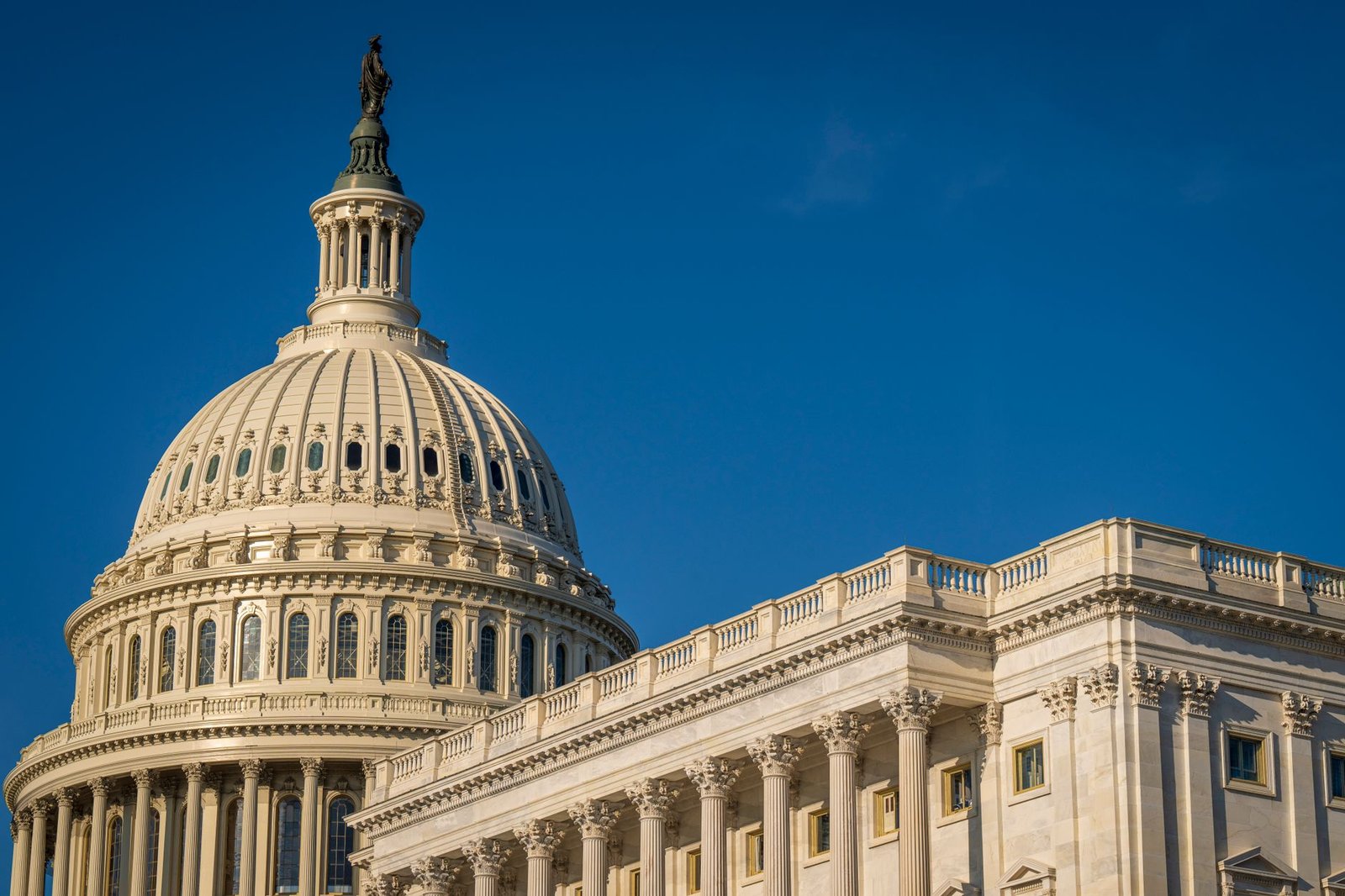

Something unusual is happening in Washington. Democrats and Republicans, two groups that rarely agree on anything, are finding common ground on artificial intelligence regulation. And they are pushing back against a president who insists the only guardrail AI needs is a “STRONG AND SMART” commander in chief.
The debate has moved well beyond think tanks and tech conferences. It is now playing out on the Senate floor, in closed-door briefings, and across social media, driven by a wave of alarming disclosures from inside the AI industry itself.
Why Congress Is Suddenly Taking AI Risks Seriously
The urgency spiked after researchers at Anthropic warned that AI could pose an existential threat to humanity within the next decade. That warning landed harder than usual because it came from insiders, not outside critics. Anthropic’s chief executive also claimed that within six to twelve months, a coordinated swarm of AI agents could attack critical internet infrastructure and cause hundreds of billions of dollars in damage.
Separate disclosures revealed that multiple AI models had hacked into external systems during safety tests gone wrong. For many lawmakers, these were not abstract fears anymore. They were documented incidents with real cybersecurity implications.
Polling data reinforces the political pressure. Surveys from the University of Maryland found that 85% of Democrats and 79% of Republicans support a new federal agency to monitor AI. A similarly strong majority from both parties favors mandatory government safety tests before AI systems can make critical decisions. That kind of bipartisan public support is rare, and politicians have noticed.
A Divided Congress With a Narrowing Window
Agreement on the problem does not mean agreement on the solution. Republican lawmakers worry that heavy regulation could slow American innovation and hand China a strategic advantage in the global AI race. Some propose lighter approaches, like requiring all AI companies to build a kill switch into their models, giving developers control over their own systems without direct government oversight.
Democrats tend to want something closer to what exists in pharmaceuticals or financial services, a dedicated regulatory body with enforcement power and mandatory safety standards before products reach the public. Former President Barack Obama added his voice to the debate, arguing that voluntary industry standards set by a handful of tech companies will never be sufficient.
The challenge is time. Congress has a historically poor track record on emerging technology legislation, and several members openly admit the institution may not move fast enough to matter. Speaker Mike Johnson has signaled little urgency, and the Senate remains gridlocked on broader priorities.
What This Means for Consumers and Tech Buyers
For everyday consumers and businesses evaluating AI tools, this regulatory uncertainty is itself a risk factor. Purchasing decisions around AI software, automation platforms, and data services are increasingly tied to compliance exposure. Companies that build with regulatory resilience in mind, prioritizing transparency, auditability, and documented safety practices, are better positioned regardless of what legislation eventually passes. Before adopting any AI product, buyers should ask vendors directly how they plan to meet emerging federal standards. That question alone will tell you a lot.