
Why the Furnace Itself Is the Real Problem
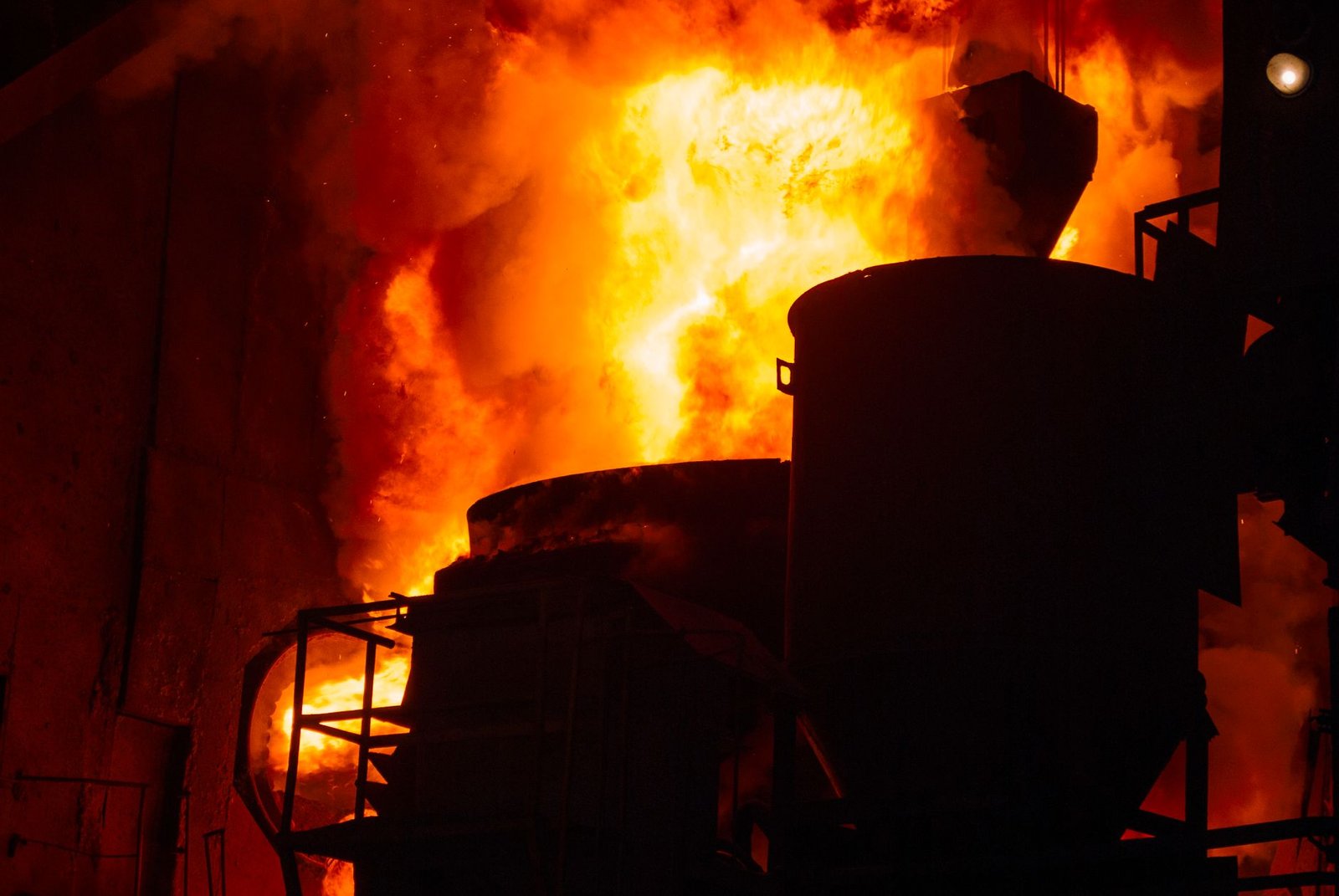
Iron and steel production ranks among the most carbon-intensive industries on the planet. For years, much of the startup energy aimed at cleaning up that sector has focused on replacing the process entirely, through hydrogen-based reduction or electric arc routes that depend on cheap clean power. Helix Carbon is taking a different bet. Its co-founder and CEO, David Brown, argues that any serious attempt to decarbonize steel has to deal with the blast furnace, the massive vessel that turns iron ore into the iron used to make steel. Those furnaces are not going away soon. Many have operated for more than a century, and replacing them requires enormous capital and years of planning.
The chemistry at the heart of the problem is well understood. Blast furnaces burn coke, a processed form of coal, to supply heat, and the carbon monoxide produced during combustion strips oxygen from the iron ore. The exhaust carries tremendous volumes of carbon dioxide that typically escape straight into the atmosphere. Helix Carbon’s pitch is simple in concept: capture that waste CO2, convert it back into carbon monoxide, and feed it into the furnace so the process needs less coke.
How the Recycling Loop Works and Why It Matters
The enabling technology is an electrolyzer, a device that uses electricity and a catalyst to remove an oxygen atom from carbon dioxide. Electrolyzers are not new, but most are designed for purified, concentrated gas streams and would struggle with the raw, dirty exhaust from a blast furnace. Brown says Helix’s design can handle the full exhaust stream, which would remove a major preprocessing hurdle. If that holds up at industrial scale, the economics improve considerably.
The coke savings are where the numbers get interesting. Published studies disagree widely on how much coke carbon monoxide injection can displace, with estimates ranging from roughly 30 to 40 percent up to 90 percent. Helix is proposing a conservative starting point of replacing 33 percent of coke, which the company estimates would save about $14 per ton of iron. That may sound modest, but margins in iron production are notoriously thin, and a few dollars per ton across global output can translate into substantial savings. The iron and steel sector represents a roughly $2 trillion combined market, according to Grand View Research, so even marginal efficiency gains carry real weight.
A Realistic Path to Market and What It Signals
Helix is not planning to start with steelmakers. Slow capital cycles in heavy industry make early revenue difficult to win there, so the company intends to court specialty chemical producers first. Brown’s reasoning is that the company does not need to capture CO2 as a standalone product. It can use the captured gas on-site to make chemicals directly from industrial waste streams. That approach turns a pollution problem into a feedstock, which is a more persuasive story for buyers who care about both sustainability targets and input costs.
The broader signal here is that decarbonization in heavy industry may increasingly come from retrofitting existing assets rather than tearing them out. That is good news for an industry with long equipment lifespans and limited appetite for risky overhauls. Whether Helix can prove its numbers at production scale remains an open question, and the coke-replacement estimates will need field validation. Still, the approach reflects a pragmatic reading of how industrial change actually happens, and it deserves attention from investors and policymakers tracking the path to lower-emission materials.
For consumers and businesses, the link to everyday buying decisions runs through material costs and supply chains. Cheaper, lower-carbon iron feeds into everything from appliances and vehicles to construction and packaging, and buyers increasingly factor embedded emissions into purchasing choices. As manufacturers begin advertising greener products and certifying supply chains, technologies that cut steel’s footprint without raising prices are likely to influence which brands and products gain traction. Watching how quickly processes like this move from pilot to plant will reveal how soon low-carbon metals become a standard option rather than a premium one.