
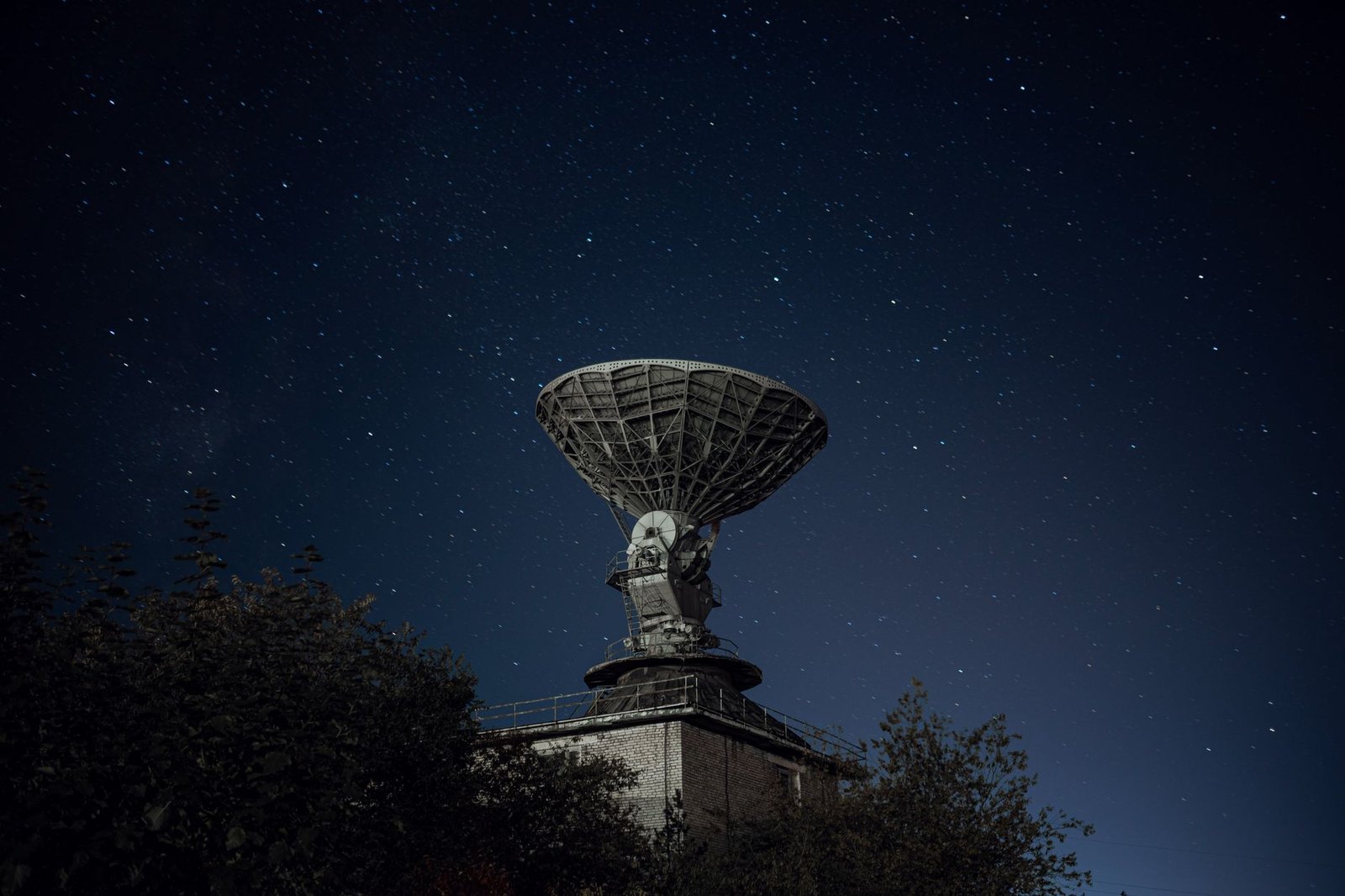

A Burst From the Early Universe
Few objects in the sky have stayed as mysterious as fast radio bursts. These flashes of radio energy last only a fraction of a second, yet they can release as much energy as the sun emits over three days. Since the first one was recorded in 2007, astronomers have cataloged hundreds of them, but the source of most has remained stubbornly out of reach. That changed when the James Webb Space Telescope was turned toward the most distant burst ever detected, first spotted in 2024 by the MeerKAT array in South Africa.
Webb’s near-infrared instruments identified a galaxy sitting precisely where the burst originated. By measuring how the light from that galaxy has been stretched by the expansion of the universe, researchers determined that the burst occurred roughly 3 billion years after the Big Bang. That places it in an era when star formation across the cosmos was at its peak. The host galaxy is also remarkably small, roughly 1,000 times smaller than the massive, star-forming galaxies where earlier bursts were traced. That contrast is what makes this discovery so valuable.
Testing Two Competing Explanations
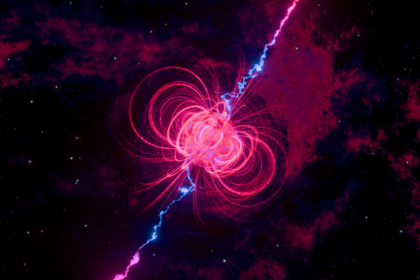
Scientists have long argued over what produces these bursts. One leading idea holds that they arise when two neutron stars, the collapsed cores of massive stars, spiral together and merge. The difficulty is timing. Such collisions can take billions of years to occur after the stars form, which would mean bursts should appear only in older galaxies. A second explanation points to the violent death of a massive star in a supernova, which can leave behind a magnetar, a rare type of neutron star with an extraordinarily strong magnetic field.
The new observations lean heavily toward the second model. Manisha Caleb of the University of Sydney, who led the study published in Science, noted that a merger is very unlikely to have produced this particular burst. The young age of the host galaxy and its compact size fit the profile of a recent stellar explosion far better than a long-delayed collision. Each newly localized burst helps narrow the field of candidate mechanisms, and this one shifts the balance decisively.
Why Precision Astronomy Matters Beyond the Lab
Finding a burst’s home is more than a curiosity for astronomers. Fast radio bursts can be used as cosmic rulers, because the material they pass through leaves a measurable imprint on their signals. To use them that way, researchers need to know where they come from and how far away those sources sit. Pairing ground-based radio detection with space-based infrared imaging, as this project did, is becoming the template for turning faint, fleeting signals into reliable measurements. It also shows how much value comes from coordinated observatories working in tandem rather than in isolation.
For consumers and the businesses that serve them, this story is a reminder of how quickly advanced sensing technology moves from research labs into everyday markets. The infrared detectors, precision optics, and radio receivers refined for deep-space work already feed into smartphone cameras, autonomous vehicle sensors, and medical imaging equipment. As buyers grow more interested in devices that see farther, sense more accurately, and process signals faster, demand for high-performance components keeps rising. Watching breakthroughs like Webb’s detection helps companies and shoppers alike anticipate which technologies will soon move from the observatory to the storefront.