

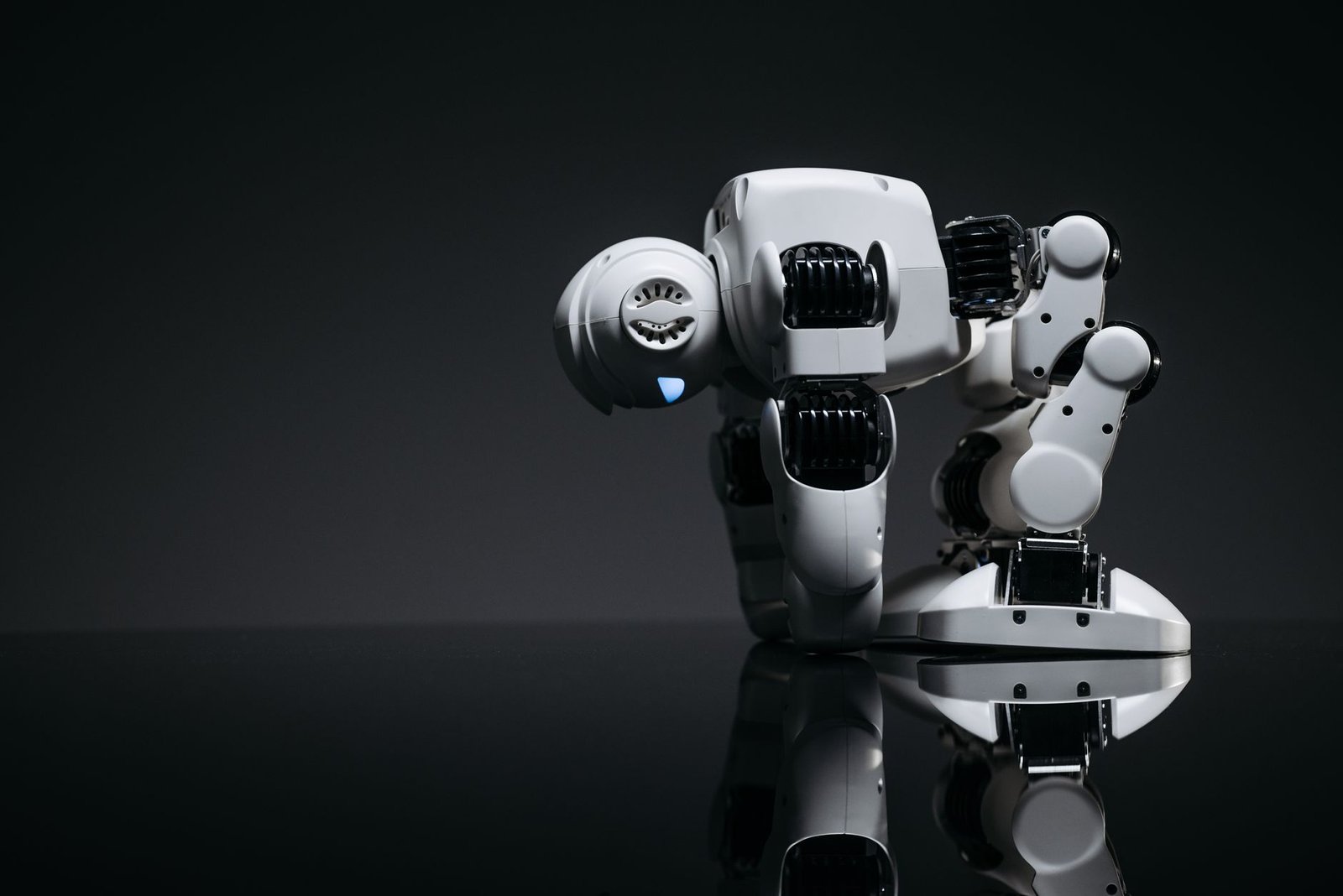

Impressive Demos, Narrow Skills
Videos of humanoid robots folding laundry, passing popcorn, or pressing microwave buttons have become a familiar sight online. Tesla’s Optimus is the most visible example, and its chief executive has described it as potentially the biggest product ever made. Other leaders in tech have made similarly sweeping claims, and a market worth trillions of dollars is often cited as the prize. Yet the gap between a polished clip and a machine that can handle a messy kitchen or a cluttered living room is wide.
The most interesting progress is happening in research labs, not in product launches. Google DeepMind uses a bimanual setup called ALOHA 2 to test Gemini Robotics, a vision-language-action model that can pack a lunchbox from examples it has seen before. The result is clumsy, but it marks a real step forward from systems that relied on thousands of lines of hand-written rules. Robots can now look at a scene, identify objects, and plan motions with a flexibility that was unthinkable only a few years ago.
The limitation is equally clear. If a task falls outside the training set, these systems often fail. A robot that can handle a familiar chore may stumble on a slightly different version of it. That brittleness is the core issue separating a lab demonstration from a dependable household helper.
Why More Data Is Not Enough
Large language models benefited from oceans of text scraped from the internet. Robotics has no equivalent. Collecting teleoperation data is expensive and slow, training on human videos produces noisy results, and letting robots learn through real-world trial and error is risky outside controlled environments. Researchers are mixing all three approaches, but skeptics argue that the physical world is too variable to be captured by any dataset.
Making a cup of coffee illustrates the problem. Every kitchen is different, every coffee machine works differently, and every cup demands a different grip. Some researchers, including prominent AI figures like Yann LeCun, believe language-style scaling will not work for the continuous, noisy data robots encounter. They point toward world models, systems that learn how objects move, collide, and deform so a robot can predict outcomes before acting.
Investment in that direction is enormous. World Labs, co-founded by Fei-Fei Li, raised $1 billion, and AMI Labs raised another $1 billion. Still, the field is early. Even promising results, such as a recent system attempting a task it was never trained on, remain partial. The robot tried, stumbled, and only partly finished the job.
What Shoppers Should Expect Next
For now, the most realistic near-term robots are narrow machines in warehouses, factories, and controlled commercial settings, where the environment can be shaped around the machine. Home robots capable of handling unpredictable chores are likely a longer story, with reliability, safety, and cost all needing to improve together. Musk’s timeline of public sales by 2027 may prove optimistic, and early adopters should be prepared for limited functionality at premium prices.
For consumers, this gap matters for purchase timing. Buyers considering a robotic vacuum, a smart kitchen appliance, or a humanoid assistant should weigh what a device can do reliably today rather than what its marketing video promises. Waiting for the next generation of AI-driven robots may pay off, especially as world models mature and costs fall. Intent to buy is strongest when a product solves a problem consistently, and the robots that win household trust will be the ones that work every time, not just in a demo.