

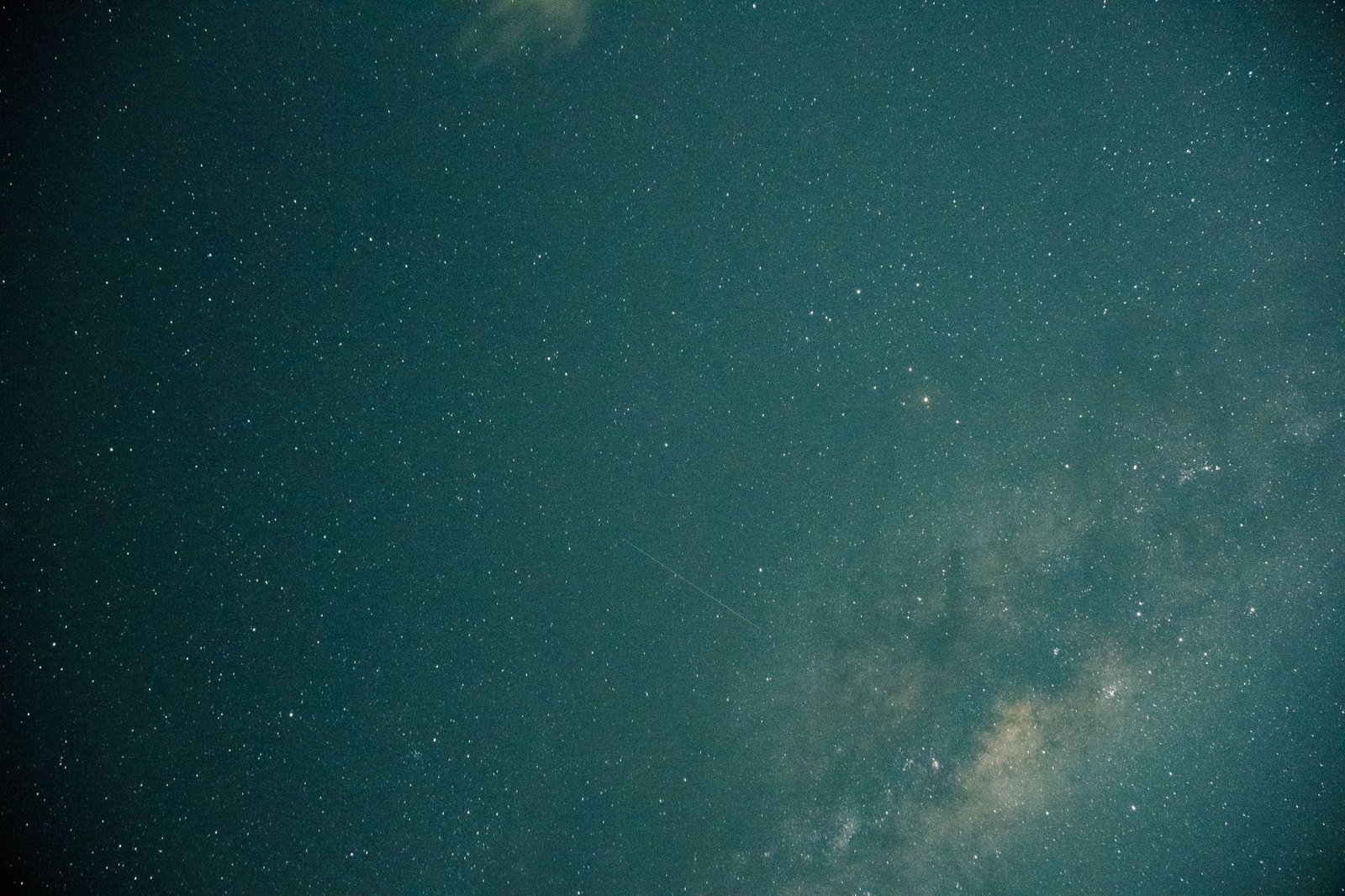

Astronomers have identified the fastest-moving star ever recorded in the Milky Way, and its extraordinary speed tells a story that reaches far beyond simple celestial mechanics. Known as S301, this star tears through space at up to 25,000 kilometers per second at peak velocity, which is roughly 8 percent of the speed of light. To put that in perspective, our own Sun moves through the galaxy at about 230 kilometers per second. S301 moves more than 100 times faster than that.
A Star Born From Chaos Near Sagittarius A*
S301 orbits Sagittarius A*, the supermassive black hole anchoring the center of our galaxy. With a mass equivalent to four million Suns, Sagittarius A* exerts a gravitational force so extreme that it sculpts the trajectories of nearby stars in ways that challenge our understanding of physics. S301 completes one full orbit in just 8.7 years, following a dramatically elongated path. At its closest approach, the distance between S301 and the black hole is comparable to the gap between Saturn and the Sun, an almost incomprehensibly tight passage near an object of such immense gravity.
Scientists believe S301 did not originate where it currently exists. The leading theory is that it was once part of a binary star system. The tidal forces of Sagittarius A* likely tore that pair apart, capturing S301 in orbit while ejecting its companion star at such velocity that it may have escaped the galaxy entirely. This kind of gravitational drama, known as the Hills mechanism, was first theorized in 1988 and S301 now offers one of the clearest observed examples of it in action.
Why S301 Could Finally Tell Us How Fast the Black Hole Spins
Mass and spin are the two defining physical properties of a black hole. Researchers have already used earlier stars like S2 to confirm the mass of Sagittarius A* with impressive precision. But spin has remained elusive. According to general relativity, a rotating black hole warps the spacetime around it in a process called frame-dragging. That effect would produce tiny but measurable deviations in S301’s orbital path over time.
Because S301 passes so close to Sagittarius A*, those deviations are expected to be detectable within a decade, far sooner than any other known star would allow. S301 was first identified in 2023 using a sophisticated interferometry instrument, and researchers were able to reconstruct its trajectory using archival data stretching back to 2017. Its next close approach to the black hole is projected for 2031, giving astronomers a firm observational deadline to work toward.
What This Means for Space Science and the Technologies Behind It
Discoveries like this depend entirely on the precision instruments and data processing pipelines that power modern astronomy. Ground-based telescope arrays, adaptive optics systems, and AI-assisted orbital modeling are all critical to this kind of research. For consumers and institutions evaluating investments in scientific computing, satellite imaging services, or astronomy-adjacent technologies, the rapid pace of discoveries like S301 signals that demand for high-performance observational tools is accelerating fast.