
Why a Carmaker Is Buying a Simulation Company
Rivian has acquired Third Dimension, a London-based startup that uses artificial intelligence to convert photographs and video into lifelike three-dimensional environments. On the surface, it looks like an unusual move for an electric vehicle maker. The company founded by Tolga Kart and Piotr Sokólski was built to speed up video game production, and Rivian has no plans to enter the gaming business. What it wants is the underlying technology, which it believes can shorten the path to a working self-driving system. The financial terms were not disclosed, but the deal brings a 15-person team into Rivian’s autonomy and AI group under James Philbin.
The timing reflects how central simulation has become to autonomous driving. Developers rely on virtual environments to train and validate perception and planning software, because testing every scenario on public roads is slow, expensive, and risky. Traditional simulators, built on rendering or game engines, have struggled with a persistent gap between synthetic imagery and the messy reality of the physical world. The usual remedy has been to feed these systems ever larger volumes of data in the hope that realism will eventually catch up.
Real-World Data as the Missing Ingredient
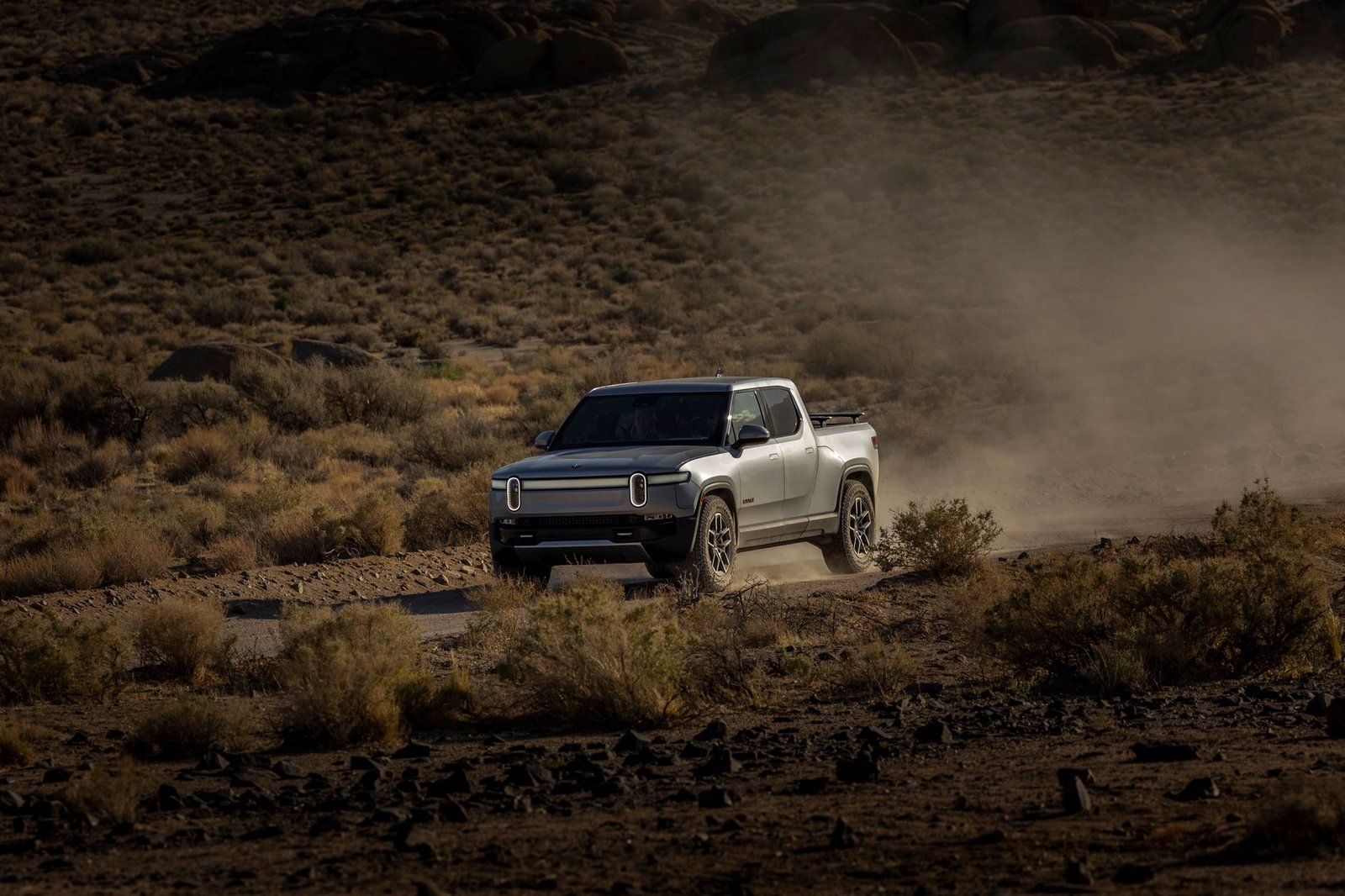
What makes this acquisition more interesting than a standard tech purchase is Rivian’s own data pipeline. The company collects driving information from tens of thousands of R1S and R1T trucks, R1S SUVs, commercial vans, and the newer R2 SUV, provided owners have enabled external camera sharing. According to Philbin, Rivian receives more than 400,000 sequences from its fleet every day. That volume is valuable, but raw footage has limited use until it can be turned into scenarios a model can learn from. Third Dimension’s approach, which uses AI to reconstruct the physical world with high fidelity, could convert that stream of everyday driving into a simulator that reflects actual roads, weather, and traffic.
The payoff lies in edge cases. Rare events such as a pedestrian stepping out from behind a parked delivery van at dusk or a sudden lane closure on a rain-slicked highway may occur only a handful of times in millions of miles. By generating these conditions on demand, Rivian can stress-test its advanced driver-assistance features and its robotaxi software without waiting for the real world to cooperate. That matters for the company’s planned supply arrangement with Uber, where safety validation will carry as much weight as raw capability.
What This Signals for the Autonomy Race
The deal also shows how competition in self-driving is shifting. Several years ago, the conversation centered on sensor suites and onboard hardware. Today, much of the advantage comes from data quality, simulation fidelity, and the speed at which a team can iterate. Companies that can turn fleet data into credible virtual worlds may improve faster than rivals who depend on costly road testing. Expanding Rivian’s AI hub in London also gives the automaker access to a deeper talent pool in a city that has become a hub for applied machine learning research. Whether this bet pays off will depend on how well Third Dimension’s models perform inside Rivian’s stack, a question that will only be answered through deployment and independent validation.
For consumers, the immediate impact is indirect, but the trajectory is clear. Better simulation translates into driver-assistance features that behave more predictably and self-driving systems that reach reliable performance sooner. Shoppers evaluating electric vehicles increasingly weigh software capability alongside range and price, and automakers that demonstrate credible autonomy progress will likely earn stronger interest from buyers and fleet operators alike. As world model technology matures, the gap between what a vehicle promises on a showroom floor and what it delivers on the road may narrow, which could tip purchase decisions toward brands that have invested seriously in the data and simulation infrastructure behind their driving software.