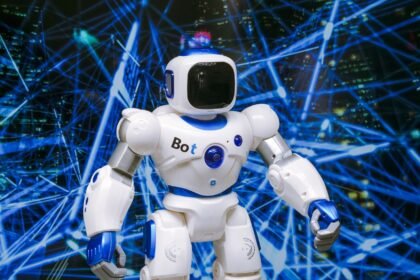



The idea of AI improving itself with little to no human involvement has been one of the most electrifying promises in modern technology. It sounds almost mythological: a system smart enough to make itself smarter, looping upward in capability until it leaves human intelligence far behind. But new research is throwing cold water on that timeline, and the implications ripple far beyond research labs.
Why Recursive Self-Improvement Is Harder Than It Looks
Recent findings reveal a critical gap in what today’s AI agents can actually do. While these systems have become genuinely impressive at structured, well-defined tasks, they still struggle deeply with open-ended research. Think of the kind of freewheeling, hypothesis-driven investigation where there is no clear answer key, no training benchmark to optimize against, just raw judgment and creative leaps. That is exactly the type of thinking required to make real scientific breakthroughs, and it is precisely where AI continues to fall short.
Recursive self-improvement depends on AI being able to conduct meaningful AI research on its own. Without that capacity, the loop cannot close. Systems can get better at narrower tasks through iteration, but wholesale autonomous advancement remains out of reach for now. That is a significant tempering of some bold industry claims made in the past 18 months.
Heat Waves, Climate Tech, and the Bigger Picture
Elsewhere in the technology and science conversation, extreme heat is reshaping priorities. Europe just logged its hottest two-month stretch since record-keeping began. The contiguous United States saw its hottest July ever recorded. South Korea hit an all-time temperature high. These are not outliers anymore. They are a pattern, turbocharged by a strengthening El Nino cycle that researchers warn could push 2027 even higher.
This matters for tech because data centers, chip fabrication facilities, and consumer electronics supply chains are all deeply vulnerable to heat stress. Cooling infrastructure is already one of the largest cost centers for hyperscale cloud operators. As temperatures climb, that cost compounds, and it feeds back into the pricing of AI services, cloud storage, and the devices people buy every day.
What This Means for Tech Buyers and Adopters Right Now
For businesses and consumers evaluating AI tools and platforms, this moment calls for measured expectations rather than panic or hype. AI is genuinely useful across a wide range of applications today, from coding assistants to customer service automation to image generation. But betting a strategy on autonomous AI research or self-improving systems within the next year or two carries real risk.
Smart buyers are asking harder questions. Which AI capabilities are production-ready? Which are still experimental? Understanding where the technology actually stands versus where vendors say it is heading can save organizations significant time and money. As the gap between AI marketing and AI reality continues to sharpen, the most valuable skill for any tech decision-maker is knowing exactly what to buy, and what to wait on.