

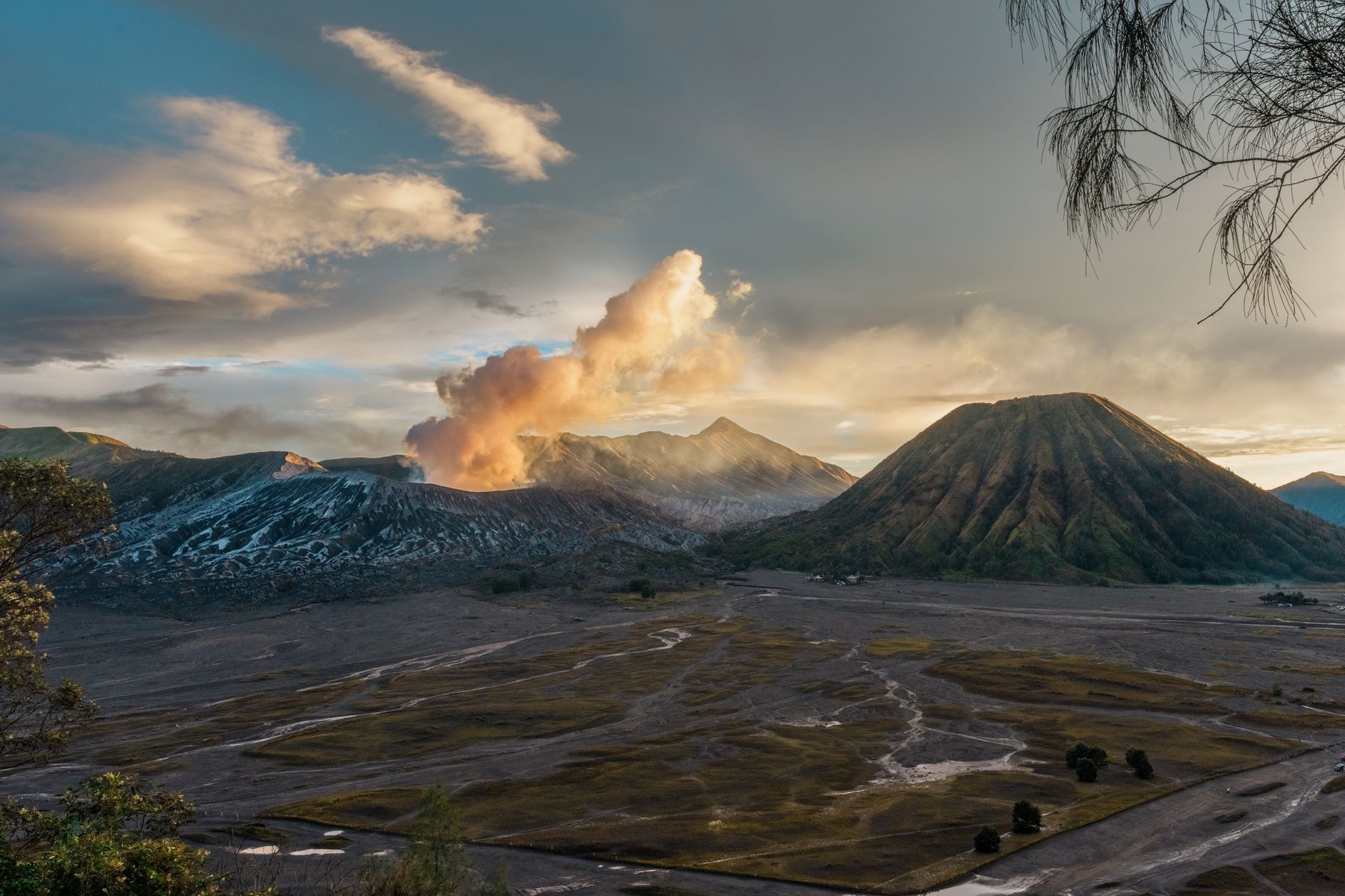

For decades, the Mount Toba eruption has held a dramatic place in the story of human survival. Around 74,000 years ago, a massive caldera on the island of Sumatra unleashed thousands of cubic kilometers of magma in roughly two weeks, making it the largest volcanic eruption in the past 2.6 million years. The event dwarfs the 1991 Mount Pinatubo eruption by a factor of approximately one thousand. Scientists once theorized that Toba triggered a volcanic winter so severe it nearly wiped humanity from the planet. New research suggests that story needs a serious revision.
What the Lake Sediments Actually Revealed
Researchers analyzed sediment cores pulled from the bottom of a small crater lake sitting on the Kenya-Tanzania border. These ancient muds act like a natural calendar, preserving chemical and biological signals from thousands of years of climate history. What the team found was striking in its modesty. The climate effects linked to the Toba eruption lasted fewer than two years and produced a temperature drop of only around half a degree Celsius. That is a far cry from the civilization-ending freeze that earlier models predicted. For a species already navigating the challenges of the Pleistocene era, half a degree of cooling for less than two years would have been manageable, not catastrophic.
Why Bigger Eruptions Do Not Always Mean Bigger Cooling
The science behind this finding is counterintuitive but well-grounded. Volcanic eruptions push sulfur dioxide into the stratosphere, where it transforms into tiny reflective droplets that bounce sunlight back into space, cooling the surface below. In theory, a larger eruption should produce more cooling. However, there is a physical ceiling to how effective this process can be. When an eruption exceeds a certain size, the sulfate aerosol particles it generates become too large and too heavy to stay suspended in the atmosphere for long. They settle out quickly, dramatically reducing their ability to scatter incoming solar radiation. Toba was simply too big for its own cooling effect to last. The sheer scale that once made it seem so dangerous actually undermined its long-term climate impact.
What This Means for Climate Science and Risk Modeling
This research carries real weight beyond academic curiosity. Climate scientists and risk analysts rely on accurate volcanic forcing data to build models that inform everything from insurance pricing to agricultural planning. If past supervolcano events have been overstated in climate models, current risk assessments for future eruptions may also be miscalibrated. Better data from geological archives like lake sediments gives researchers sharper tools for predicting how modern volcanic events could affect global temperatures, crop yields, and energy demand. For consumers and investors watching climate-linked markets, including renewable energy stocks, agricultural commodity futures, and climate-resilient infrastructure, understanding the real boundaries of volcanic climate forcing is increasingly relevant. Accurate science drives smarter buying decisions, and that principle holds whether you are modeling a portfolio or planning a supply chain.